Wednesday, September 18, 2013

Horses and Hounds at Blenheim Palace

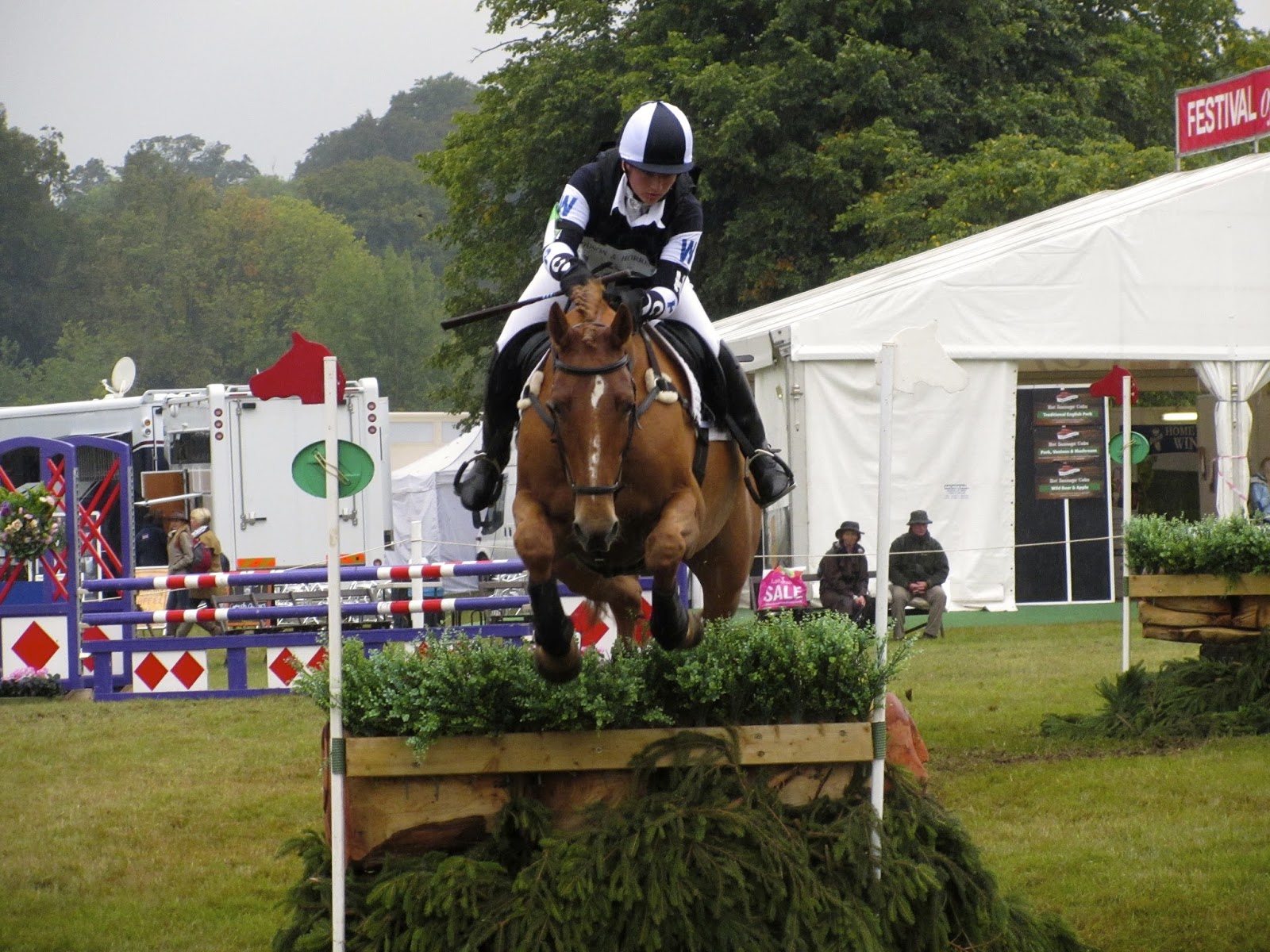
Last week I had a glimpse of the Blenheim Palace International Horse Trials.  The Trial last four days with "Dressage", Cross-Country, and Show Jumping, which takes place on Sunday in front of the South Lawn the Palace.

I only made it to see the first go-round of the Show Jumping.  It was pouring rain and yet it was still amazing to see. I had a sense that this was a real slice of English Horse and Hound culture.  I look forward to next year and better weather and a chance to stay longer and see the cross-country race.


Tuesday, September 17, 2013

On the North West edge of Oxford is Port Meadow, an area of grazing land that has been used for horses and cattle for at about 3000 years. The land has never been ploughed or been treated with any fertilizer or pesticide. So historically and scientifically, it is of great interest to the community.


Alfred the Great, who technically founded Oxford on the 10th century, gave the 300 acres of pasture next to the River Thames to the Freemen of Oxford in return for their help with defending the kingdom against the marauding Danes. The Freemen's collective right to graze their animals free of charge is recorded in the Doomsday Book of 1086 (the first official census of England) and has been exercised ever since. The grazing rights belong to the homes that surround the meadow to this day.


Last week, as part of the Oxford Open Door weekend, John and I signed up for a guided walk of Port Meadow with an archeologist as our guide. We learned that because the meadow has never been ploughed, it contains well-preserved archaeological remains, some of which survive as residual earthworks.


There are several round barrows that are what remains of Iron and Bronze Age dwellings. They are left over foundations made from centuries of turf layered upon turf, where dwellings from the Bronze and Iron Age once stood. They are two to three thousand-year-old-scars right under our feet and all the times I’ve walked on Port Meadow, I never noticed them until they were pointed out to me by our guide.


There are also the faint remains of the foundations of 16th-century horse racing track and low stone bridges laid over washes and ditches for this purpose survive to this day.


During World War One, part of Port Meadow was used as a military airfield and you can still see the outline of the grass airfield and where the temporary bunkers were. In WWII the Royal Artillery had a camp was set up on the meadow for military personnel evacuated from Dunkirk.


Cattle and horses still graze on the land.  Our guide said that if animals stopped grazing, this land would tun into forest within a generation.


These apartments on the edge of the meadow are hugely controversial. They are new student housing (just opening this month) that the university built without going through the proper channel of Oxford City Council Planning, who would never have let them be built because they completely destroy the view of the city from the meadow.

Port Meadow is a typical English flood-meadow and and is a favorite area for walking since it is right on the edge of the city. Sometimes in the winter the meadow floods and, if frozen, forms a huge area for ice-skating. The first time I saw Port Meadow, it was late winter and the meadow was a lake -- completely flooded by the Thames. It looked like a lake on the edge of the city and I wondered why I never knew Oxford had a lake!

I am going to start paying more attention the the scars beneath my feet, especially here in Oxfordshire.

Twins?


Today Port Meadow is still peaceful grazing land, much as it was 1000 year-ago, minus the marauding Danes.  They have been replaced with students, rowing crews, and walkers like me. 


Comments and corrections are always welcome!


Monday, September 9, 2013

Windows of Oxford

If eyes are the "windows to one's soul",  what then are windows?
 In Oxford, they are beautiful!


Window of a warden's cottage near Christchurch Meadow


Window box at Brasenose College


Window in St. Michael's Church


Looking out of the Divinity School window at the Radcliffe Camera 


A Divinity School window on a winter day


Looking out the window from the Hertford College's Bridge of Sighs


Roses at St. John's College


The Clarendon Building from the Divinity School


Looking out toward the inner Quad at Jesus College


William Tyndale window at Hertford College Chapel


Looking out at the Fellow's Garden at Exeter College


Oxford Union


Windows of the Oxford Union Library


From the Sheldonian 

The Sheldonian


The Radcliffe Camera from a window at St. Mary's


Jesus College


 Christchurch


The Cloisters at New College 


Exeter College


University College


Shakespeare's Players Room above the courtyard to the Covered Market