Tucked away in the rolling hills between the charming Cotswold villages of Snowshill and Broadway is a beautiful farm that grows all sorts of lavender. It's a sight to behold, especially when the lavender in full bloom. Best to come in late June and July when the lavender is at it's peak. It's breathtaking.

It's a third generation farm that originally grew wheat and barley. Lavender was first planted here in 2000 and it seems to thrive in the dry limestone cotswold soil. The farm now grows over 35 different varieties, some 70 miles of rows, and 250,000 plants in total.

The farm's crops -- Cotswold Lavender -- are gently picked by a special harvester (the only one of its kind in the U.K.) and then steam distilled on the farm and made into unique and all natural lavender products. The farm has a store that sells it's luscious products and gifts as well as a tea room. We had a lunch of a freshly made sandwich and lavender flavored ice cream, which tastes exactly like how lavender smells.

There is a £3.50 fee to wander through the fields and I think it's definitely worth it. The color and scent of the lavender, combined with the gorgeous rolling Cotswold landscape, makes it an amazing, almost other worldly experience.

For more information: Cotswold Lavender Farm


As I walked through the fields this old English song (that dates back to the 17th century) kept running through my head:
Lavender's blue, dilly, dilly; lavender's green
When I am king, dilly, dilly; You shall be queen
Who told you so, dilly, dilly; who told you so?
'Twas my own heart, dilly, dilly; that told me so.

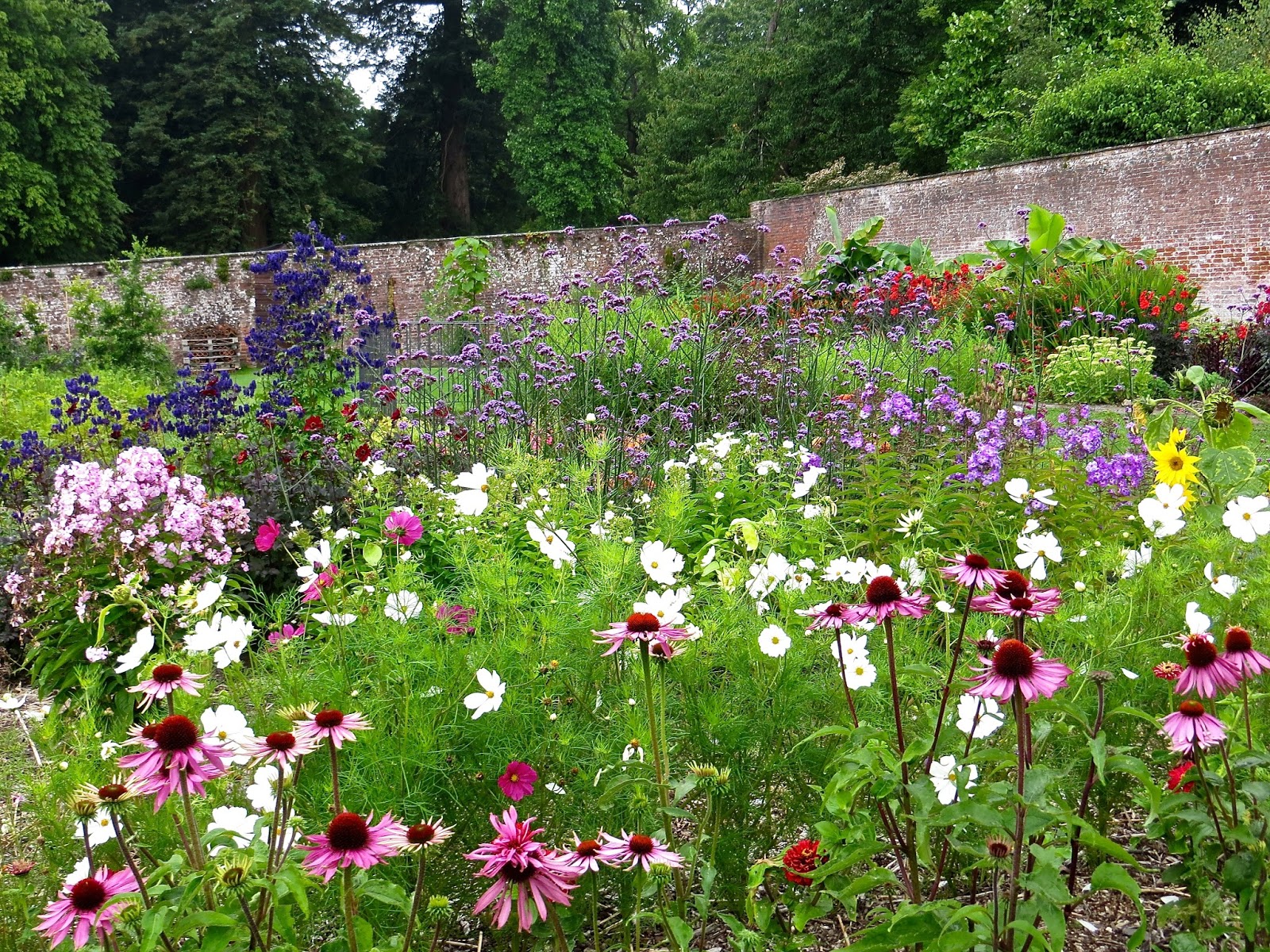
When the farms lets a field go fallow and rest for a season, they plant it with wild flowers which is a perfect backdrop for the lavender.


About a mile away from the lavender fields is the charming village of Snowshill, known for its unspoilt beauty and for the views over the Severn Vale to the west. It's tucked away in a bit of a valley sheltered by hills on three sides.


Not to be missed is Snowshill Manor, owned by the National Trust. It is a typical Cotswold manor house, made from local stone. The main part of the house dates from the 16th century but part of it was once the property of Winchcombe Abbey dating back to 821. During the Dissolution of the Monasteries in 1539, the Abbey was confiscated by King Henry VIII who then gave it to his 6th wife, Katherine Parr.

Between the early 1600's and 1919 it had a number of tenants and owners, many of them absentee, so it gradually fell into a state of disrepair. Charles Paget Wade bought estate and rebuilt the ruined manor beginning in 1919.

More about Charles Paget Wade: He was born in 1883 and trained as an architect. In 1911 Wade's father died and he inherited a share in the family business based on sugar estates in the West Indies.
He served in France during World War and after the war purchased the estate at Snowshill.

What Snowshill Manor is best known for, however, is not in the architecture but the interior furnishings. The house is a maze of rooms crammed full Wade's decidedly eclectic and eccentric collections of, well, just about everything.

Wade started collecting things at the age of 7 and eventually built up a collection of more than 22000 items of furniture, clothing, paintings, all sort of other things. His criteria for selecting items was that the piece was hand made and represented his interest in color, design and good craftsmanship.
He bought and restored the house, not to live in but to use it for his collection and for entertaining, and he entertained great with flair the likes of contemporaries like Virginia Woolf and Queen Mary. He lived in a small cottage in the garden and this was his bedroom.

For 26 years, Wade lived unattached in the house. He finally married in 1946, at the age of 63, and after that increasingly spent more time at his home in the West Indies. In 1951 he gave his estate to the National trust and died in 1956. The house and collection are pretty much as they were when he died.

It is hard to describe the collection at Snowshill. The rooms are filled with fascinating clocks, toys, musical instruments, masks, spinning wheels, weaving and spinning tools, Japanese armor, to name a few.

For me the house is an absolute surprise. It's a rambling jumble of delightfully odd, unusual, beautifully designed, and thought-provoking objects. The house and garden are lovely and there are so many interesting things to explore. One could return again and again and see something new and intriguing each time.

If fascinating clutter and over stuffed rooms aren't to your liking, the garden, grounds and views are lovely. Lavender fields, charming village, National Trust manor, and the most unusual collection and interesting things -- I look forward to returning.