Showing posts with label Day trips from Oxford. Show all posts

Tuesday, September 29, 2015

Rousham House and Gardens

About 12 miles north of Oxford is the beautiful Rousham House and Gardens. The house was built in 1635 by Sir Robert Dormer and has been in continuous ownership of the same family since then. In the 18th century the house and gardens were remodeled in a free Gothic style by William Kent, the eminent English architect. Rousham really is a gem and well worth a visit.  


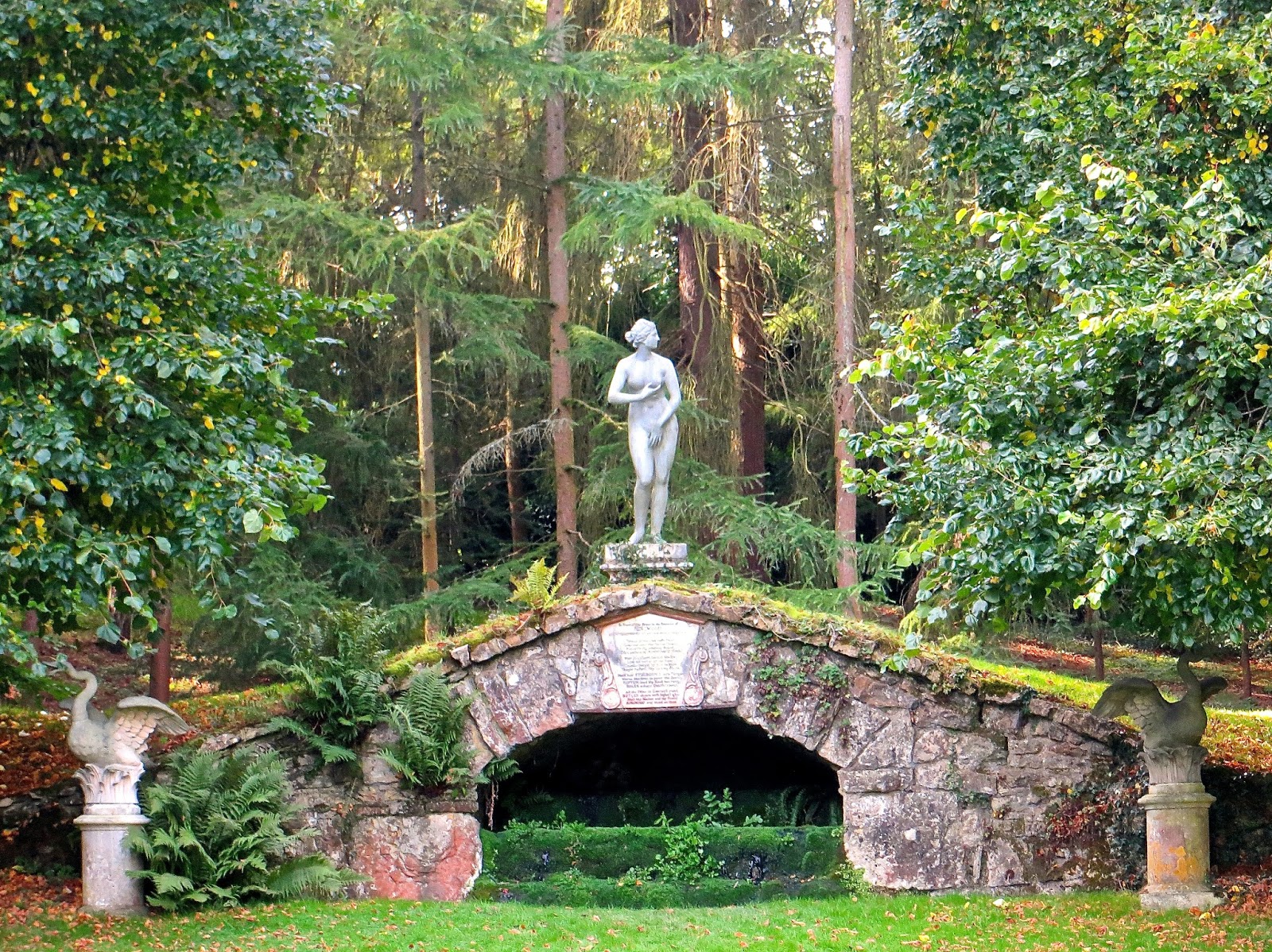
The house is still a private home so tours of the house are by special appointment only.  But the gardens are open for viewing and they are absolutely magnificent. There is a great deal of variety in the gardens from the bowling green, the walled kitchen garden, the pollarded orchards, the rose garden, and the cutting garden which had beautiful dahlias in bloom. There is also dovecot which is now really a pigeon house.  There are an assortment of sculptures and small architectural gem beautifully placed throughout the grounds.  Today the gardens where beautiful in their Autumn colors and I look forward to visiting in the spring or early summer when the secret garden is in its prime.  


For more information:  

http://www.rousham.org/visit 

http://www.gardenvisit.com/garden/rousham_house_and_garden


The brochure for gardens states that Rousham is uncommercial and unspoiled (I agree) with no tea room and no shop.  Bring a picnic, wear comfortable shoes and it is yours for the day.


The River Cherwell flows through the back of the grounds.  We had lunch not even a mile away at Kizzies Bistro in Lower Hayford situated right on the Oxford canal -- another place I recommend.  


Thursday, July 30, 2015

The Rollright Stone Circle

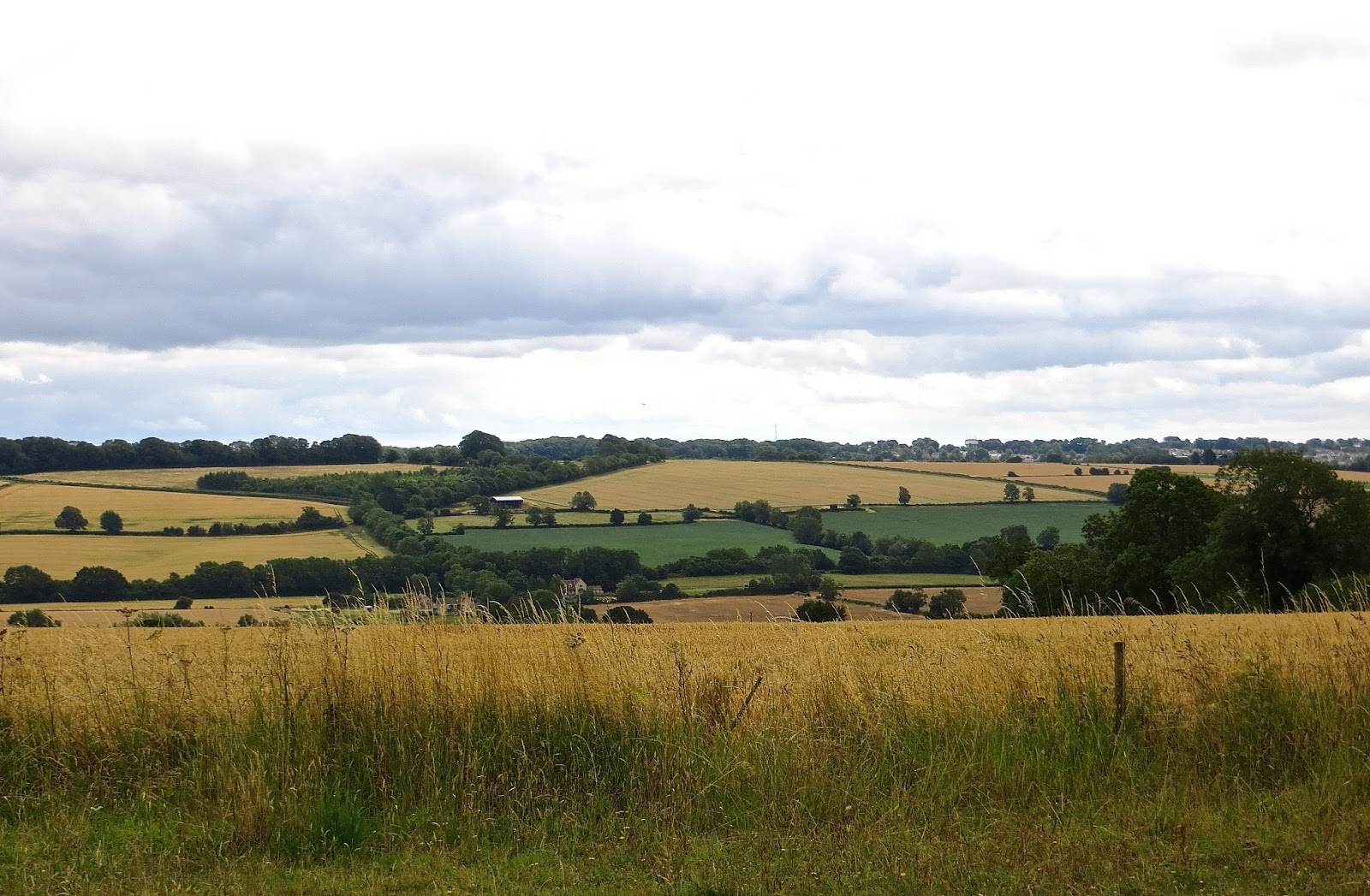
I finally made my way to see the Rollright Stones, a stone circle just 30 minutes north of Oxford. While not as impressive as Stonehenge and Avebury, they are lovely in their own right and they are graced by beautiful views of the Cotswold countryside all around them.  It's well worth a wander to see this beautiful place.  

The area consists of three groupings of stones: The Kings Men stone circle (early Bronze Age -- 1500 to 3500 BC), the King Stone (most likely a burial marking), and the Whispering Knights (likely to have been used as a place of burial.)


There are two legends about the origins of the stones. The first legend tells of a king of ancient England who was marching along the ridge with his men (the main circle). They stopped to rest, and while the king (the King Stone) surveyed the way ahead, a group of knights went aside to plot against the king, and were immediately turned to stone.


Another legend goes that while the king was surveying the scene he met a local witch. The witch made a bargain with him, saying, "Seven long strides shalt thou take, If Long Compton thou canst see, King of England thou shalt be." The king, thinking this an easy bargain, replied, "Stick, stock, stone, as King of England I shall be known."  The king took his allotted seven strides, but his view was blocked by the mound known locally as The Archdruids Barrow.
 The witch triumphantly announced, "As Long Compton thou canst not see, King of England thou shalt not be, Rise up stick and stand still stone, For King of England thou shalt be none. Thou and thy men hoar stones shall be, and myself an eldern tree"Whereupon the king and his men became stones, and the witch turned into an elder tree.  


LOCATION
Located on a minor road just off the A34, signposted Little Compton. There is a small fee for entrance to the main circle, but the Whispering Knights and the King Stone can be seen for free. Free parking in a layby, but no toilet or food facilities.
For more information: 

http://www.rollrightstones.co.uk/

 http://www.britainexpress.com/articles/Ancient_Britain/rollright-stones.htm

https://en.wikipedia.org/wiki/Rollright_Stones

http://www.megalithic.co.uk/article.php?sid=140


The view of the valley from the stone circle


Sunday, June 28, 2015

Bletchley Park

 My daughter and son-in-law were visiting us recently and we planned a day trip to Cambridge.  We thought we would stop at Bletchley Park for a quick visit on the way -- it's only about an hour north of Oxford.  Long story short, we never made it to Cambridge -- we found Bletchley Park to be so interesting we stayed all afternoon.  


Bletchley Park was the site of the U.K.'s Government Code and Cypher School, which during the Second World War regularly intercepting and decoding the secret communications of the Germans.  Historian of World War II  have written that the intelligence produced at Bletchley shortened the war by two to four years, and that without it the outcome of the war would have been uncertain. The park is now an educational and historical center that honors and celebrates the accomplishments of the Code Breakers.


We had a wonderful guide take us around the park and tell us what Bletchley was like during the war.  It's well worth joining up with a group and a guide -- we heard all kinds of fascinating stories that brought the whole place to life for us. 


At the center of the park is an eclectic mansion built by Sir Herbert Leon starting in 1882.  The mansion and grounds were acquired for wartime headquarters for the Government Code and Cypher School in 1938.


These are the main gates to the complex.  They don't look anything like the main gate in the movie The Imitation Game.  That's because they used Joyce Grove at Nettlebed for the some of the scenes, such as the gates and the exterior shots of the mansion. 


There are several Huts on site.  Hut 3, 6 and 8  have been restored to what they were like during the war and in Hut 8 is where you'll find Alan Turing's Office.


There are four Enigma machines on display -- a German made code scrambling device and used by Britain’s code breakers as a way of deciphering German signals during the war. With the advent of the war, the enigma machine's settings were changed once a day, giving 159 million million million possible setting to choose from. Finding a way to break that each day, without the Germans knowing, was the herculean task the British Code Breakers were up against.


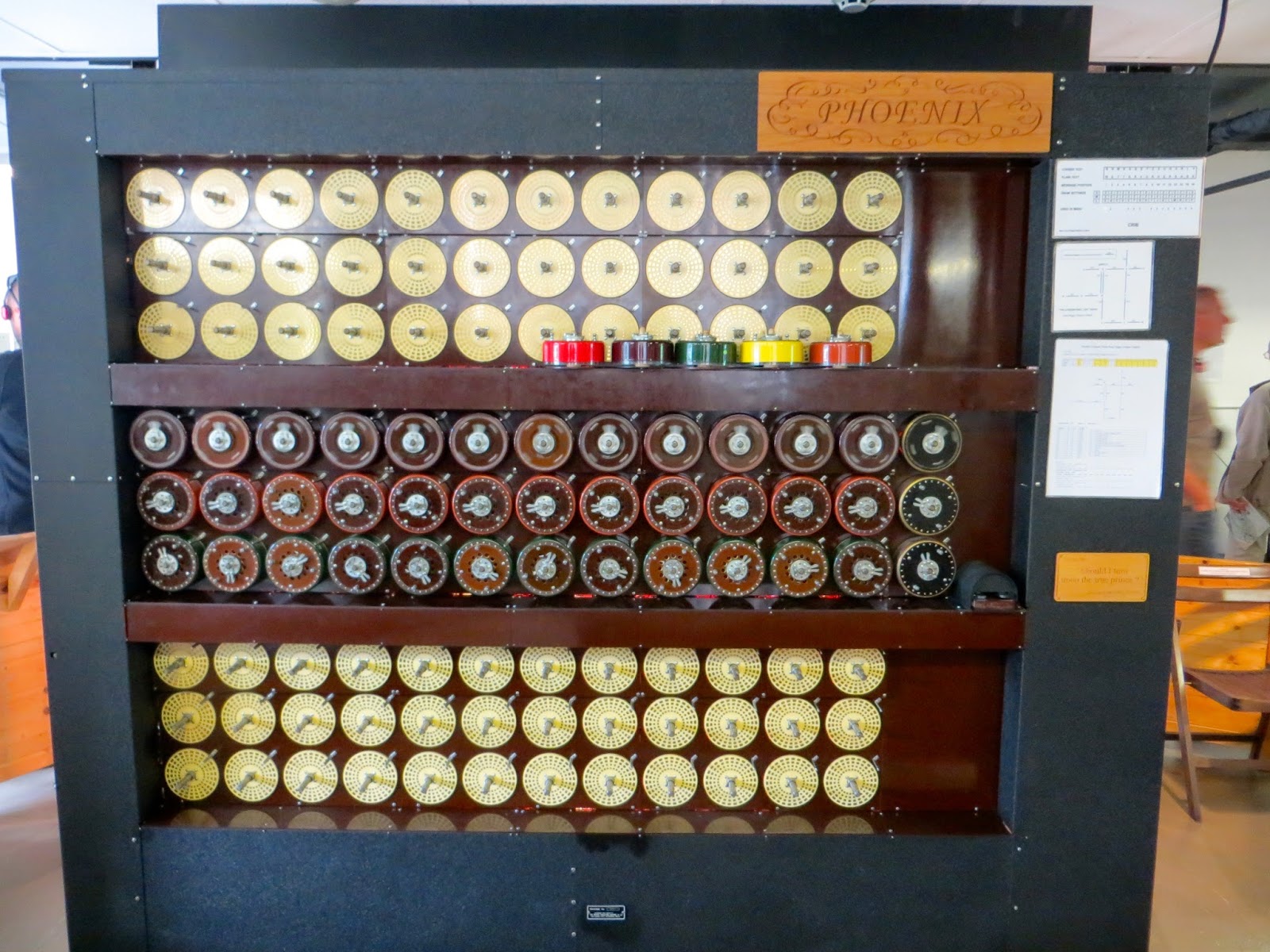
The process of breaking Enigma was made possible by the invention of a complex electro-mechanical device, designed by Alan Turing and Gordon Welchman.  The Bombe, as it was called, ran through all the possible Enigma wheel configurations in order to reduce the possible number of settings in use to a manageable number for further hand testing.


This Bombe has been restored to working order and a guide did a demonstration of how it works. It's absolutely fascinating.


 There is also an exhibit of costumes, props and sets on display that were used in the movie The Imitation Game.  


Inside the Manor House there is a large hall with a pub and a meeting hall that were used as a set in the movie. In fact it was no set -- it was the real hang-out place for the Code Breakers.


At the end of the war, Alan Turing is awarded the OBE for his wartime services. He was never allowed to tell his family what he did during the war and they didn't find out until 1975 -- 30 years later.  All Bletchey personel took an oath that they would not talk to anyone about what they did at Bletchley for 30 years.  In some cases, the oath was for life.  That is why they story of the Code Breakers was one of the best kept secrets of the war.     


In 1952, seven years after Alan Turing was declared a war hero, he was found guilty of gross indecency (homosexual acts) when such behavior was against the law in the UK.  He had a choice to serve time in jail or accept treatment with estrogen injections.  He choice the injections.   Turing died in 1954, 16 days before his 42nd birthday, from cyanide poisoning (most likely be suicide).  


In 2009, following an Internet campaign, British Prime Minister Gordon Brown made an official public apology on behalf of the British Government  for "the appalling way he was treated".  Queen Elizabeth II granted him a posthumous pardon in 2013.  


"WE ALSO SERVED"


A monument to the 9000+ women and men who served at Bletchey park and could never speak of what they did during the war for 30+ years or a whole generation.  


For more information about Bletchley  Park and Alan Turing:

 http://www.bletchleypark.org.uk/

http://historysheroes.e2bn.org/hero/timeline/91