Showing posts with label Wales. Show all posts

Monday, August 5, 2013

Gogledd Cymru -- Northern Wales

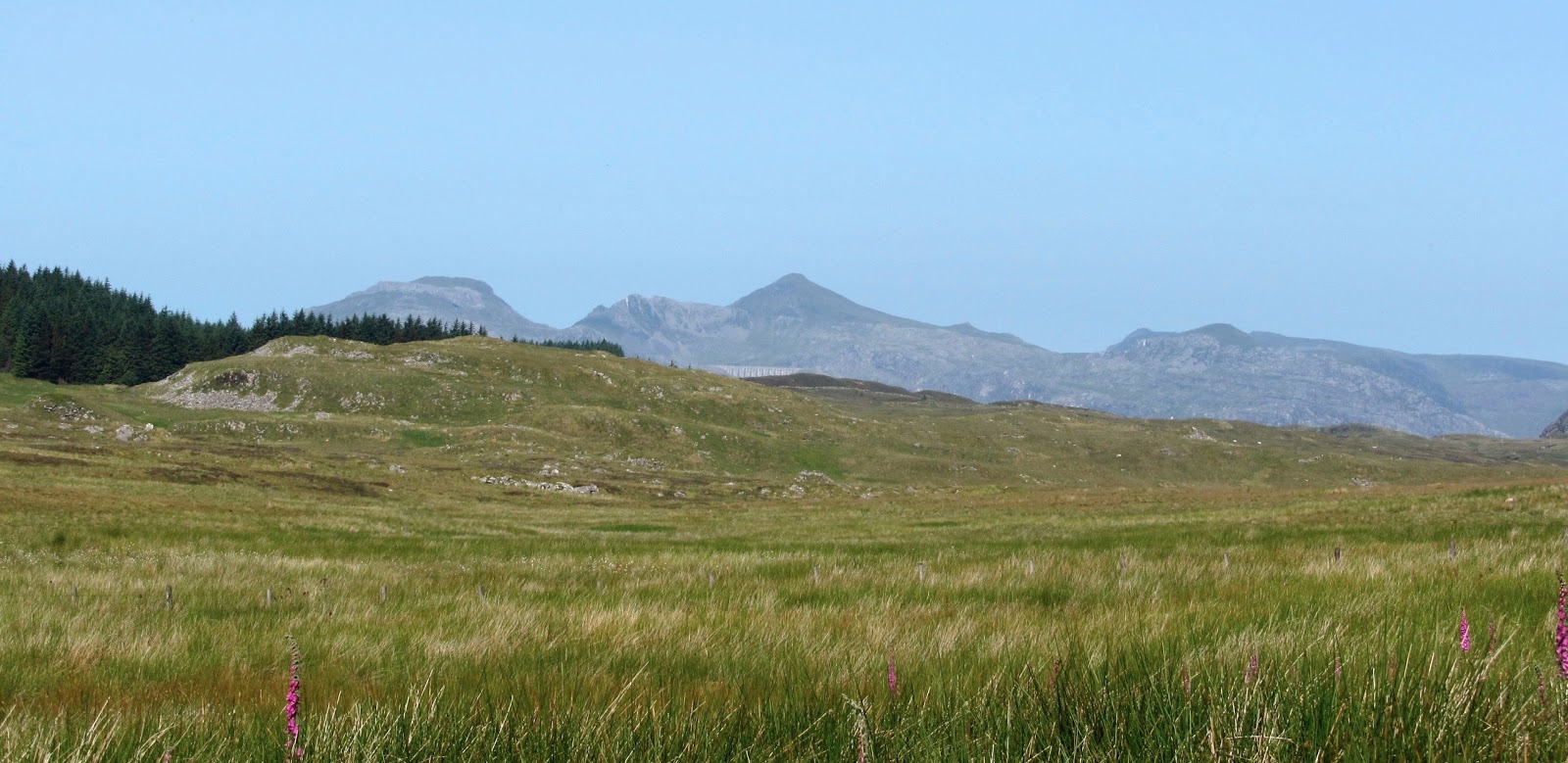
Northern Wales = rolling hills; mountains; valleys; rugged coast; beautiful beaches; gorgeous forests and lakes; places with strange names and spellings; a beautiful language; castles; great men's choirs; and delightful people.  Our first stop was Portmeirion. 


Portmeirion is a fabricated tourist village in Gwynedd that was designed and built by Sir Clough Williams-Ellis between 1925 and 1975 supposedly in the style of an Italian village (or, in my mind, more like a Disneyland village)

Portmeirion first became famous as "The Village", the setting for the 1967 TV series "The Prisoner" and has been the film setting of several movies since then.   


This is also where Portmeirion Pottery was founded. In 1960 Susan William-Ellis (daughter of Sir Sir Clough Williams-Ellis) and her husband, Euan Cooper-Willis took over a small pottery decorating company. Susan Williams-Ellis had been working with A.E. Gray for some years, creating designs to sell at the gift shop in Portmeirion Village.


Then in 1961 the couple purchased a second pottery company, Kirkhams Ltd, that had the capacity to manufacture pottery, and not only decorate it. These two businesses were combined and Portmeirion Potteries was born. While father chased his village designing dreams, daughter created her pottery designing empire.


I think Portmeirion looks a bit like a Disney village but it does have is a lovely setting, complimented by the beautiful gardens and the sea. For that, and discounted Portmeirion pottery, it is worth a visit.


What I liked best were the gardens and the woods.  


This is Dyffryn yr Ithfaen or The Granite Valley.  During the nineteenth century granite was in great demand and several quarries were established in this valley. A Liverpool company bought the quarries in 1861 and built a small village and port for workers who travelled from afar during the working week.In 1900, around 2,000 quarrymen had found employment along a five mile stretch of coastline, on the north Llŷn Peninsula. 

In 1911, Nant Gwrtheyrn merged with other local quarries to form part of the Welsh Granite Company. In the 1920s tarmac suddenly became the preferred road surface and granite and slate from the  Nant's granite quarries were no longer in demand.  This led to the closure of the quarries in the 1940s when the mines and properties were abandoned.  Some of the old village has recently been restored and turned into a Welsh Language center.  It's a fascinating place.


These abandoned homes in the Nant date back to 1776 when three families farmed the valley.  It amazes me to think that these old farm houses are as old as the country we call the United States of America.


This is Snowdon, the highest mountain in Wales -- 3560 feet above sea level and the highest point in the British Isles outside Scotland. It is surrounded by Snowdonia National Park. You can reach the summit by any number or trails or by a small cog railroad. We just admired it from afar.


Conwy is a walled market town on the north coast of Wales. The walls are still intact and you can walk on the wall path most of the way around the town.


Conwy castle is an amazing fortress that is remarkably intact, especially considering it was built by Edward I during his conquest of Wales, between 1283 and 1289.  The  views from the turrets allow you to really see the walled town and to imagine how people lived in the village surrounded by those stout and protective walls. 


The combination of castle and town wall make Conwy one of the United Kingdom's finest surviving medieval town. 


Conwy is well worth a visit!


Conwy also boasts the smallest house in Great Britain. It measures 10 feet by 6 feet  and a height of 10 feet 2 inches (2 floors). It was used as a residence from the 16th century until 1900. 


Not far from the town of Conwy is Bodnant Garden, a National Trust property and an absolute delight.  Bodnant Hall is the residence of Lord Aberconway (built in 1792) and is not open to the public. The gardens cover 80 acres and have magnificent views of the Snowdonia mountain range and are well worth a visit.


The garden was at the height of it's summer glory.  I look forward to returning in the Spring sometime.


On the way home we stopped at two amazing engineering feats.  The first was the Pontcysyllte Aqueduct, a navigable aqueduct that carries boats across the Llangollen Canal  over the valley of the river Dee.  Completed in 1805, it is the longest and highest aqueduct in Great Britain. 


 The aqueduct is 1000 ft long, towers 126 ft above the River Dee, and is supported by 19 stone piers.


In June 2009 it became a World Heritage site, putting it on an equal footing with the Great Barrier Reef and Statue of Liberty.  Have you ever heard of it? I hadn't.


They call it "the stream in the sky"  It is a remarkable feat of engineering!


The second stop was the famous Iron Bridge, a100-ft cast iron bridge that was built across the river in 1779. The area around Ironbridge is described as the "Birthplace of the Industrial Revolution" due to the fact that it was here where Abraham Darby perfected the technique of smelting Iron with coke, creating a much cheaper way to produce iron. And that changed everything.


Monday, May 6, 2013

Cymru AM byth (Wales forever)

Just 2 hours west of where we live is the most beautiful country of Wales.  John and I finally took a few days off to explore the southwestern part of Wales.  

We started with a few hours wandering around Cardiff, the capital of Wales and the 10th largest city in the United Kingdom. 


We walked around the castle grounds and the pedestrian part of the city.  It's a lovely city. 


We then headed west to the Pembroke peninsula and as we approached a round-about, there loomed Carew Castle just waiting to be explored.  


Carew Castle  is an enormous stone castle in a picturesque location next to a mill pond. The castle is ruined now, but was once a powerful stronghold and a grand Elizabethan mansion.


We spent two nights based in Stackpole at a beautiful National Trust property that now owns 100s of acres of the most beautiful walking trails and the unspoilt beaches of Barafundle Bay and Broad Haven. 


Stackpole is both a listed designed landscape and an internationally important nature reserve. We saw so many varieties of birds and even two otters not far from this bridge as we were walking in the evening.


We were there just as spring was beginning to explode into a million shades of green.  It was just gorgeous!


We took a walk along the cliff tops and the gorse was blooming bright yellow.


There was a small heard of "wild" ponies grazing and the foals where about 6 weeks old and adorable. 


I wish I could capture the magic of the light, the new green and the sparkle of the water in the background. 


Stakepole is just a few miles south of Pembroke and it's famous castle.


It was here that Henry VII was born and spent much of his childhood.  


 Pembroke is one of the greatest pre-Edwardian castles in Britain even though it is in ruins. There is a natural cave below the castle grounds called The Wogan.  The cave overlooks the river and there is a spiral staircase that goes up into the castle making for easy access to the river and the sea.


 After two days on the Pembroke Peninsula we headed east to the Black Mountains and Brecon Beacons National Park.  We explored the gorgeous ruins of Carreg Cennen Castle.


 The view from the castle was beautiful. The castle dates back initially to the roman times with the remains of this fortress being built in the 1300s. Wales is full of medieval castles.


Next stop, Ystradfellte and the 6 mile loop walk of 4 spectacular waterfalls.  If you look closely, you can see me with my arms spread wide behind the waterfall. 


The area is considered to be part of the Waterfall Country -- a beautiful area laced with rivers and hills and lots of waterfalls.  This Waterfalls walk follows the Afon Mellte river and passes the falls: Sgwd Clun-gwyn and Sgwd Isaf Clun-gwyn, t Sgwd yr Eira = where the footpath passes behind the waterfall.


This is the view from our Bed and Breakfast at Celyn Farms in the Brecon Beacon's Nationial partk. This is Sugar Loaf Mountain.


Our last day we explored another important part of Wales -- a coal mine.  We took a guided tour of the Big Pit coal mine that was opened at the beginning of the 19th century.  Our guide was an ex-miner who actually worked in the mine so was fully experienced in the actual workings. We had to wear the very same equipment – helmet, cap lamp, belt, battery and ‘self rescuer’ – used by miners. It was a fascinating and sobering experience.


In the early 1800's women and children worked in the mines pushing and pulling the drams like the ones in this photo.  By the early 1900s women were replaced by ponies but children as young as six still worked the mines. Here is a minute long clip from the BBC that describes the conditions in the mine for the children:


hhttp://www.bbc.co.uk/learningzone/clips/children-working-in-coal-mines/145.html


At the end of the tour there is an exhibit that explains all about coal, it's demand, the working and political situations of the mines, the lives of the miner and their families  -- everything you want to know about coal.  One fact haunted me:  Between 1851 and 1920 there where over 3000 deaths in the mines in Wales. Look at the bottom line of this next sign...there were 3,390 deaths in the Chinese mines between January and July 2002! 


We ended our trip by wandering down the Wye Valley, that valley that separates Wales from England. 4 days in Wales was not enough!  We look forward to retuning for more of this beautiful land.  


Our last stop was Tintern Abbey,  one of the best-preserved medieval abbey in Wales.  Tintern was the second Cistercian foundation in Britain, and the first in Wales. The present-day remains are a mixture of building works covering a 400-year period between 1131 and 1536.

In 1536 Tintern Abbey surrendered to  King Henry VIII’s officials and ended a way of life which had lasted 400 years. It has been a ruin ever since. 


Once again
Do I behold these steep and lofty cliffs,
That on a wild secluded scene impress
Thoughts of more deep seclusion; and connect
The landscape with the quiet of the sky.

William Wordsworth's LINES WRITTEN A FEW MILES ABOVE TINTERN ABBEY


“Dychwelyd i wlad eich hynafiaid; gwaed yn galw i waed.Return to the land of your fathers; blood calls to blood.” ― Horton Deakins
I'm looking forward to retuning.